So you’ve got a carton of Rainbow Dozen sitting on your kitchen counter, and now you’re wondering how to turn those beautiful eggs into equally beautiful chicks. Here’s what you need to know before you set your incubator.
Fresh fertile eggs need a little downtime before they go anywhere near heat.
Skipping this step is a common reason home hatches underperform, so it’s worth the wait.
Every incubator behaves a little differently, so run yours empty for 24 hours before your eggs arrive to make sure it’s holding steady.
| Stage | Temperature | Humidity |
|---|---|---|
| Days 1–18 | 99.5°F (37.5°C) forced-air | 50–55% |
| Days 19–21 (lockdown) | 99.5°F (37.5°C) | 65–70% |
A cheap hygrometer is worth every dollar here — guessing humidity is the single biggest reason home hatches fall short.
Eggs need turning to stop the yolk sticking to the shell membrane.
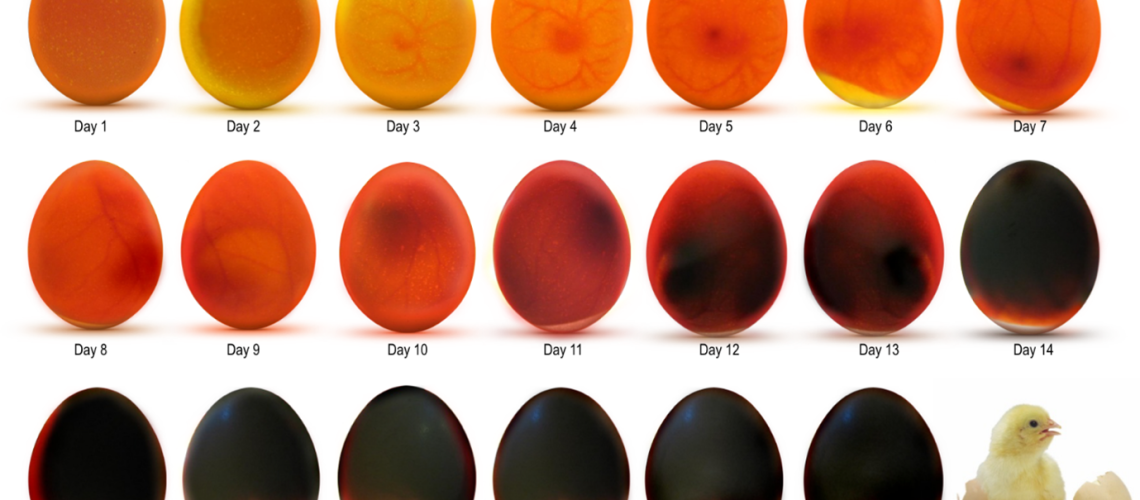
Candling — holding a bright light behind the egg in a dark room — lets you check development without opening the shell.
Day 7: Look for veining and a dark spot (the embryo). Clear, empty-looking eggs usually aren’t developing.
Day 14: The egg should look mostly dark, with just the air cell showing clearly at the wide end.
Don’t worry if results vary across a mixed carton like the Rainbow Dozen — different breeds and even individual hens can show slightly different development speeds.
Hatching from shipped eggs is genuinely rewarding, but hatch rates are naturally a little lower than eggs collected straight from under a hen. This is normal, and part of why we handle every carton so carefully before it goes out the door. Aim for realistic expectations rather than a perfect dozen, and treat every chick that hatches as the bonus it is.
Got questions? Reach out any time — we’re always happy to talk hens.